How front closure bras fit and fasten
What the sternum hook changes about band sizing, the shape of the back panel, and the line under a shirt.
4 min read
Because the front clasp has fixed spacing, matching your ribcage measurement directly to the band size matters on day one.
Fastening hooks at the center gore
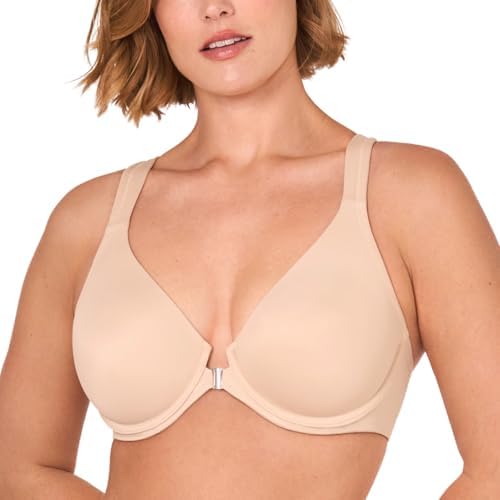
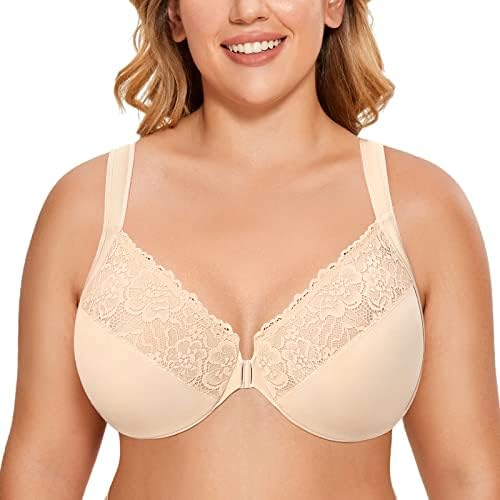
Metal hooks sit flat against the sternum on these cuts. You fasten the bra right in front of your chest where your hands have clear leverage and sight. That arrangement removes the need to twist a band around your waist or reach behind your shoulder blades. The center bridge stays rigid to keep the cups separated and grounded against your breastbone.
A padded fabric underlay rests beneath the hardware. This textile barrier keeps the metal eyes from resting against your skin during movement. For women with reduced shoulder rotation, arthritis in the fingers, or stiffness in the upper back, reaching the front makes dressing direct. You pull the straps over your shoulders and click the hooks shut down the center column without straining.
Back panels and strap positioning
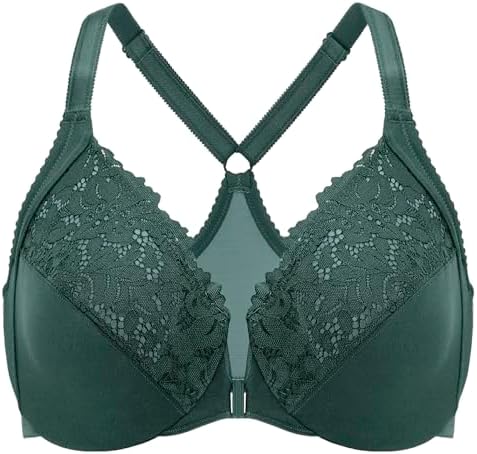
Most front fastening designs bypass traditional back hook columns completely. We use that solid real estate to build wider back wings, racerback angles, or crisscross power mesh bands. An X-back panel uses reinforced fabric strips stitched across the scapulae. These bands anchor the bra firmly against the torso so the straps cannot slip off narrow or sloping shoulders.
The wide fabric surface spreads anchor tension over a broad patch of skin. Because the rear panel is solid fabric rather than an adjustable hook eye tab, the back profile sits flat against the body. Heavy busts pull forward on the shoulders, but an integrated back panel balances that weight across the ribcage. The straps stay centered and stable throughout normal daily reach.
Fixed bands and sizing accuracy
A standard rear closure offers three or four rows of eyes to tighten as elastic ages. A front clasp bra does not offer that step down adjustment. The hooks sit in a single vertical column between the cups, locking the band to one fixed circumference. You cannot tighten the band by moving to an inner row of hooks down the road.
This structure means sizing must be exact from the start. Check our size chart against your snug under bust measurement in inches. If your ribcage measures 34 inches, select the 34 band rather than sizing down expecting stretch room. The underband needs to grip your ribcage firmly right away, because the center bridge width cannot be shortened or extended.
Cup separation and center stability
The hardware at the sternum acts as a structured center bridge. On our underwire front-closure models, the wire channels terminate right at the base of the hook placket. This holds the wire tips secure against the chest wall without letting the cups splay outward. The separation prevents skin rub between the breasts during warm days or long wear.
Unlined three-part cups work alongside this rigid center. Bottom cup slings lift the tissue while the side supports direct the bust forward away from the armpits. The front hooks hold the inner edges firm, so the bust stays centered instead of spilling toward the middle. That anchor creates a stable, defined shape across the front profile without thick foam padding.
Appearance beneath thin shirts and knits
A flat vertical closure creates a smooth line beneath fine cotton tees and fine knits. Back-clasp bras often leave a raised rectangle across the spine, but a solid back panel stays completely level. The front hook placket lies in the natural hollow between the breasts, which keeps the hardware hidden inside the sternum dip.
The main consideration under lightweight shirts is the neckline drop. Front hook rows sit higher on the chest than a deep plunge wire to ensure the closure stays secure under tension. Pair these styles with crewnecks, boatnecks, or standard button shirts. The result is a clean line across the back and an even profile across the front.
Put it to work
The finder runs the chart these notes describe: two numbers in, a band and cup out, plus a count of what we cut in it.