How minimizer and full coverage cuts differ
A close look at projection, cup seams, and how redistributed tissue changes the drape of buttoned shirts.
4 min read
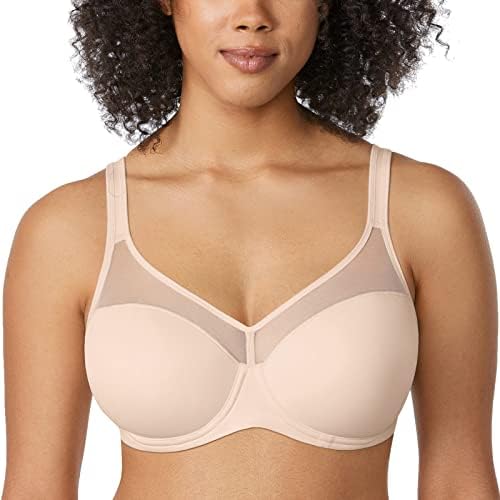
A minimizer redistributes tissue across a broader surface to reduce forward depth without flattening the bust into a solid shelf.
Redistributing depth across the chest
A minimizer bra does not squash tissue against the ribs like a sports binder. It takes the forward apex of a full cup and spreads that volume across a broader base. The underwire reaches wider under the arm, while the cup profile remains shallower across the center front. This shallow curve pushes tissue slightly outward toward the sides and upward toward the collarbone.
The result is a reduction in forward projection by roughly one to one and a half inches. You keep your natural cup volume, but the apex sits flatter under clothing. Because we build these cups with non-stretch fabrics, the redistributed tissue stays anchored along the perimeter instead of shifting back toward the center as you walk or sit.
How tailored shirts sit flat
Buttoned shirts pull open when the bust apex projects further than the front placket allows. The fabric strains against the middle buttons, creating horizontal pull lines and wide gaps that expose your bra underneath. When a minimizer flattens that forward peak, the shirt fabric drops straight down from the collar to the waistband without catching on the chest apex.
The side seams of your tops will also sit differently. Because the cup shifts volume wider toward your underarms, tailored shirts with tight armholes might feel snugger at the sides. If your blouses are cut narrow across the back, this wider profile requires checking how the sleeve attaches to the shoulder seam before you size down in shirts.
When standard full coverage works better
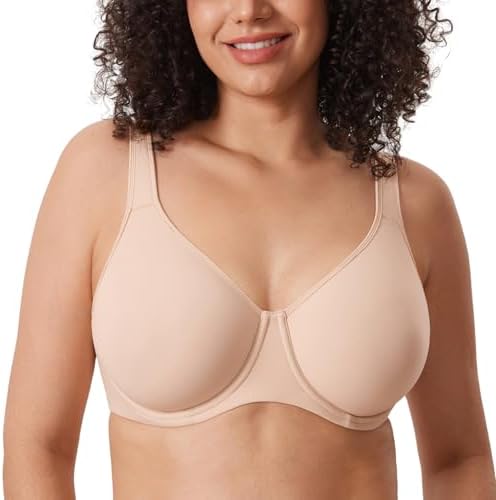
Full coverage cuts with three-part construction serve a different purpose than minimizers. They lift the bust upward and center it directly in front of the ribcage. If you have narrow shoulders or a shorter torso, spreading tissue sideways can cause your upper arms to brush against your bust as you move. In those frames, forward projection feels more comfortable.
A full coverage cup gives maximum containment along the top edge without altering the footprint of your breast root. Soft mesh or stretch lace along the upper cup panel accommodates full upper tissue without spilling over the neckline. You get complete coverage and strong support while keeping your natural silhouette upright and centered between your shoulders.
Why three-part cups create roundness
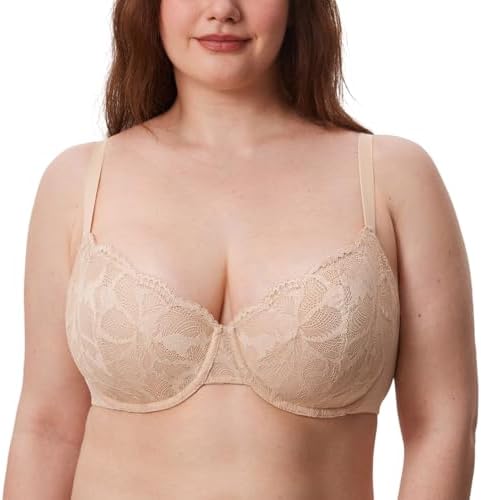
Molded foam cups try to force natural tissue into a rigid pre-formed shell. Our three-part cut and sew cups use three separate pieces of fabric stitched together to build three-dimensional depth. The bottom two panels form a secure base that lifts from below, while the vertical seam drives the breast forward into a rounded shape.
The horizontal transverse seam joins the top panel to hold the apex in place without collapsing it. Because the seam lines carry the mechanical tension of the garment, the cups can remain unlined, light, and breathable. This multi-panel construction handles heavy tissue in bands up to 48 and cups up to K without needing thick foam pads.
What to check in the mirror
Turn sideways to evaluate how your bra alters your profile. Look at where the fullest point of the bust aligns between your shoulder and your elbow. A standard full-coverage bra will show a distinct forward apex lifted to the midpoint of the upper arm. The side profile will show clear separation between the breast tissue and your torso.
With a minimizer, that apex curve will look softer and shallower. The side wing will sit higher under your arm, capturing tissue that was guided away from the center front. Check that the center gore still rests firmly against your sternum. If the gore floats away from your chest wall, the cups are too small to contain the redistributed volume.
Put it to work
The finder runs the chart these notes describe: two numbers in, a band and cup out, plus a count of what we cut in it.